It started with one girl who wasn't told
Sharmin Kabir is a Bangladeshi social entrepreneur and one of the country's leading voices on menstrual health and hygiene management, reproductive health, gender equality and climate justice. Her work began with a personal experience: growing up in silence about her own body, and later seeing the same silence holding back girls across Bangladesh.
- 11
- years of work
- 200,000+
- people reached
- 22
- districts across Bangladesh
Our story
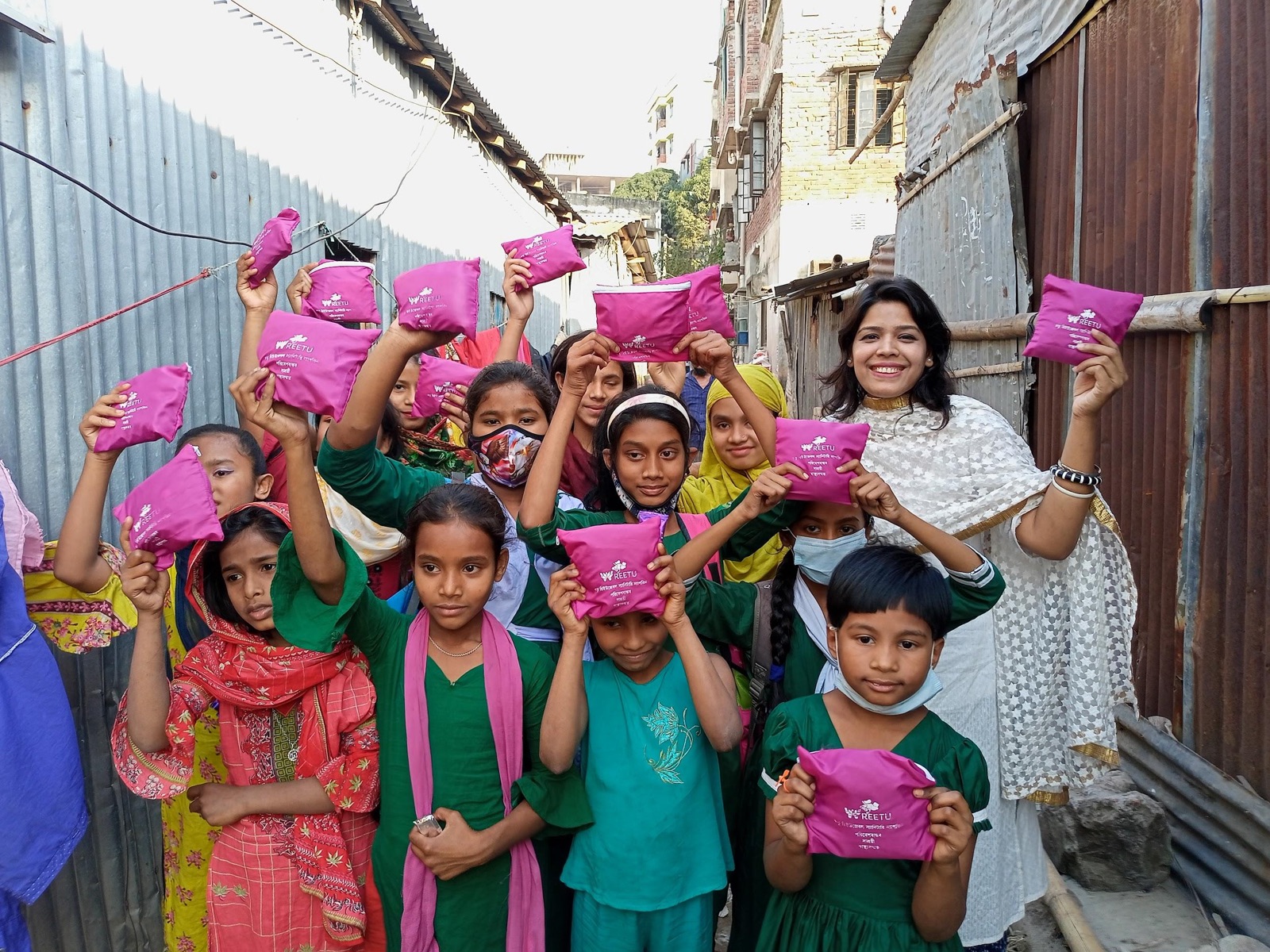
In 2016, she founded Wreetu with a small accelerator grant from SPARK Bangladesh and her own savings. Over 11 years, she has built it into a social enterprise that has reached more than 200,000 people across 22 districts.
She introduced several of the region's firsts: Bangladesh's first puberty comic books for girls and boys, South Asia's first period guide for fathers, and the country's first certified washable sanitary napkin, produced by women from marginalised communities.
Today, Sharmin leads Wreetu's work where reproductive health, child marriage, gender-based violence and climate vulnerability meet. She has advised the Government of Bangladesh, UNICEF and WaterAid Bangladesh, and has represented Bangladeshi girls and women at the UN Commission on the Status of Women, Beijing+30, APFSD and Women Deliver. Read more about Sharmin.
Going global
Wreetu is now set to work globally. We are ready to share our tested models, materials and expertise with partners across South Asia and the Global South, and to contribute the knowledge and voices of Bangladesh to the global movement for gender equality, SRHR and climate justice.
Vision
A world where every girl and woman, wherever she lives and whatever the climate brings, is free to shape her body, her health and her future.
Mission
To advance reproductive health, gender justice and climate resilience by equipping girls, women and young people with knowledge, care and opportunity, engaging boys, men and communities as partners, and taking locally-led solutions from Bangladesh to the world.
A first period should be a milestone, not the end of childhood.
Help us reach the next 100,000 girls by 2030.